
AI Automation for Small Businesses: Where to Start
In short
Start with one process that eats time every week and follows clear rules, such as lead follow-up, sales admin or keeping track of work. Map it step by step, automate the routine parts and keep a person on anything that needs judgement or a personal touch. Prove it works on that one process before you automate the next.
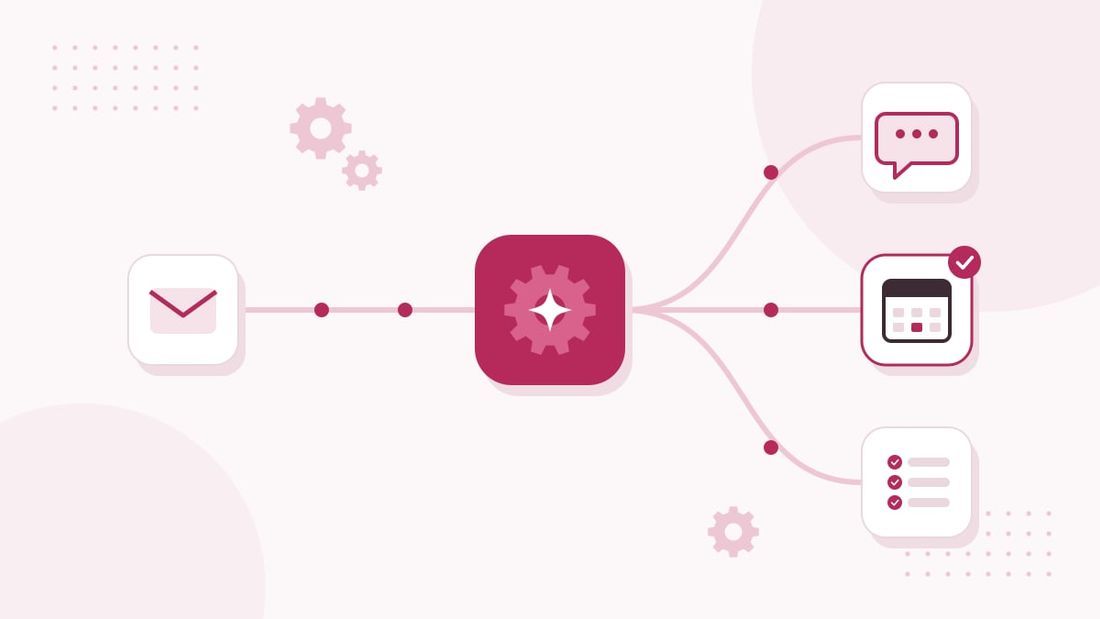
Most small businesses don’t lose time on the work they are good at. They lose it on everything around it: chasing enquiries, copying details from one system to another, remembering who needs a reply, keeping track of what’s done. That is where AI automation earns its keep, and it is also where most attempts go wrong, by starting too big.
What AI automation means for a small business
Automation means a task runs by itself when something happens: a form is submitted, an email arrives, a deal moves to the next stage. AI adds the ability to deal with messy input: reading an enquiry and working out what the person wants, drafting a reply, summarising a long thread, sorting requests by type.
For a small business, the goal isn’t a futuristic system. It is fewer hours spent on routine work, faster replies to customers and fewer things forgotten.
Where to start: choose the right first process
The best first process has four things in common:
- It happens often, every day or every week.
- It follows clear rules most of the time.
- Mistakes or delays cost you in lost enquiries, late replies or wasted hours.
- You can describe it step by step without saying “it depends” at every turn.
Lead follow-up is the classic example. An enquiry arrives, someone has to reply quickly, log it, and follow up if there is no answer. Every business that relies on enquiries knows how easily that slips when the week gets busy.
What we automated first in our own business
We started where we tell clients to start: in our own business. Our own automations run three things:
- Our sales process, so every enquiry moves through the same stages without anyone having to remember the next step.
- Lead follow-up, so new enquiries get a timely response and nobody falls through the cracks.
- Work management, so tasks are created, assigned and tracked without manual admin.
None of these replaced the parts that need a person: the conversation with a client, the advice, the decisions. They removed the routine around them.
Map the process before you automate it
Before choosing any tool, write the process down as it really happens:
- What starts it?
- What information comes in, and where does it go?
- Who does what, in what order?
- Where are the decisions, and who makes them?
- What happens when something goes wrong?
Mapping usually reveals steps that can simply be dropped. Automating a messy process just makes the mess faster, so tidy it first.
Keep a person in the loop
AI is good at drafting, sorting and summarising. It is not responsible for your business. Decide in advance which steps the automation completes on its own and which it only prepares for a person to approve. Anything that commits you to a price, a promise or a sensitive message to a customer should be checked by a person, at least until you trust the results.
Check the output regularly in the first weeks, and keep a simple way to switch the automation off if something looks wrong.
Look after your data
Automations move customer data between systems, and AI tools may process it. If you work with customers in Spain or elsewhere in the EU, data protection rules apply. Before you connect anything, know which tools will handle personal data, where it is stored and who can see it, and keep your privacy policy in line with what you actually do.
Do it yourself or get help
A single, simple automation is often something you can set up yourself with off-the-shelf tools. Help pays off when a process crosses several systems, when customer data is involved, or when you’d rather spend your time running the business.
That is what our business automation service does: we look at how your business runs, advise on what is worth automating and in what order, and implement it if you want us to. Each project is quoted on what you want to achieve. If you are also rethinking your website, how long it takes to build a website is a good next read, and the free AI readiness check shows how ready your site is for AI search.