
The New (AI) Era of Search: Are You Adapting Your Business?
In short
People still search on Google, but they now get an AI Overview first and can carry on in AI Mode, while many go straight to ChatGPT, Gemini or Claude. Fewer clicks reach websites, and traffic will keep falling. Businesses need to rethink how they position themselves: the focus now is on being visible, easily contactable and trusted, with the user first, not the search engine.
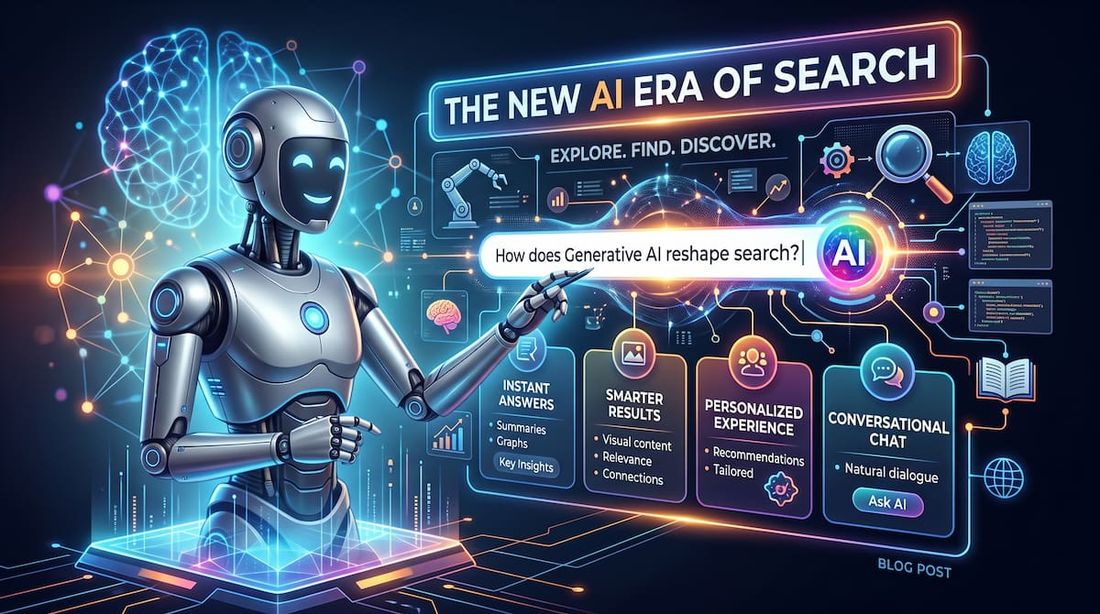
I’ve been working in SEO since launching my first online business in 2003. During that time I’ve been through all of the major ups and downs with Google’s relentless updates over the years, as it sought to weed out spam and improve the search results.
During those early years, it was normal for there to be some stability in the search results. If you ranked number one for a search term, you could reliably enjoy that position for some time, unless you were doing any underhand link building or creating low value content.
Search has come a long way since those early days. Long gone are the days of stable rankings and on top of that, there are now new ways that users discover websites and businesses online.
The game has changed and it’s still changing at a rate that I’ve never witnessed before in my 20+ years working in search.
Google was using AI long before ChatGPT
Long before ChatGPT appeared on the scene in late 2022, Google was already heavily invested in AI and using it to refine its search results (and many other things). I spent several years in the lead up to that pivotal moment in 2022 digesting Google AI related patents and understanding how these systems function.
ChatGPT was most people’s first experience with an AI tool. Looking back now, it wasn’t actually very good, it made lots of mistakes (hallucinations) but it was fun and it became an overnight sensation.
Google was caught napping, or so it seemed, although realistically they were more advanced than OpenAI at that time. They just hadn’t released their technology to the public and when they did, in the form of a terribly named product, Bard, it was far inferior to ChatGPT.
Google couldn’t just release a direct competing tool that made things up when it wanted to. Google had an obligation to provide information and results that could be trusted. Google was too important and too influential to release an unreliable tool.
So it released Bard which just wasn’t a great product. It was too strict, not engaging enough and they had missed the boat as most people had already got stuck into ChatGPT by this time.
From Bard to Gemini, and everyone else
It took Google another year before it finally rolled out Gemini to the public, a far superior AI tool compared to Bard. Bard was gone, never missed and Gemini provided a new truly useful AI assistant that only made some stuff up on occasion. Most of the time, it could be trusted.
However, being late to the party really cost Google dearly. ChatGPT has over 900 million users per week, Gemini is a fraction of that. And then there are the other options such as Claude (favoured by developers and geeks), Perplexity (big in the US and once seen as a Google competitor), Microsoft’s Copilot (which no one talks about) and several others.
With all of these options today that enable users to use natural language to ask questions and to organise themselves, we have entered very quickly into a very different era of search.
What this means for your website
Yes, people still search on Google but now you are mostly offered an AI Overview first, and an option to continue that journey via AI Mode. The links in the search results are getting less and less visibility which is why most businesses are now losing traffic compared to last year.
And if you’re really digging into something in more detail, you may prefer to ask ChatGPT, Gemini or Claude and discover everything you need to know… before even visiting a website.
This is happening more and more and there will be a point, probably within the next 5 years, when Google’s search results no longer list websites like what we have known since its inception. Users only want to visit a website now when they truly need to take an action such as buy something, make an appointment or to find out more about a business.
Users now have the luxury of not having to click through to a bunch of websites to get all of the information that they need. It’s all there now, you just need to ask for it.
Businesses today need to rethink how they position themselves and their websites for the AI era. It’s not the traditional SEO, although the fundamentals are still important, and traffic will continue to decline. Today it’s about being visible, easily contactable and trusted.
In this new era of search… the focus has to be on the user, not the search engine.